“
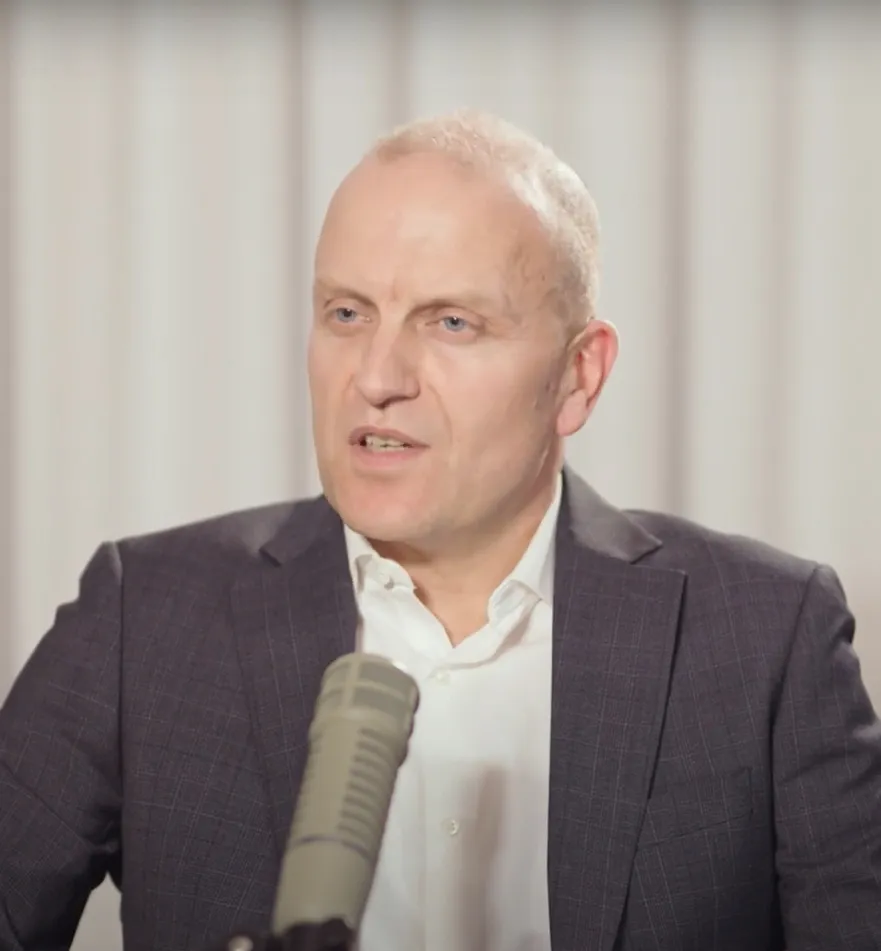
I now ship resilient, layered systems. The LUMEN Framework gave me the architecture to move from one-off prompts to production-grade AI workflows.
Michael Zohner
CEO & Consultant · Market Intelligence Engine
The flagship Cohorte program. Live mentors, written feedback every week, and a working AI system shipped by week nine. No theatre.
Not a demo. A real AI system used at your company, measured and signed off by week nine of twelve.
A scoping doc, a verification plan, and a governance runbook: the operating layer your team inherits.
A mentor rubric on every exercise. Two paragraphs, not a score. The grade is the transcript we sign.
Twelve months of Engine Room membership, quarterly alumni sessions with CM, and a personal advisory call after graduation.
The curriculum is public. Every week has reading, an exercise, and a rubric. Biweekly mentor 1:1s keep you on track. The syllabus is versioned; each cohort ships a small improvement.
Two weeks before kickoff. You meet your lead mentor, scope your project, and read the three papers we don't teach without.
The Thinking Stack. The Nucleus OS. The Scoping Document. Three weeks installing the cognitive discipline and operating layer before you touch a tool. The prompt is never the bottleneck.
Build your first specialist bot. Automate a proven workflow. Architect a three-agent team. Each week produces a working system, tested and documented in your Nucleus.
The verification curriculum from CM's research. Self-consistency sampling, conformal prediction, and the TrustGate framework. Your system ships by end of week nine.
The governance layer, the capstone debug, and demo day. You leave with a deployed system, a written operating manual, and a mentor signature on each.
Part-time by design. Real work gets done between Tuesday kickoff and Thursday review. The rest is reading, writing, and shipping. No 9-to-5 simulation.
A short Monday note from CM. One idea, one frame, one nudge.
About an hour of reading. The session assumes you've done the pre-read.
Two hours, cohort-wide. One topic, one case, one pushback.
One paper, one letter, one playbook chapter.
The week's applied exercise. Usually on your own project.
Post in the cohort space on Circle. Read two peers. Leave one useful comment.
One of your mentors, rotating every fortnight. Review, working session, next steps.
Written answer, not a slide. Mentor returns rubric within 48h.
Drop-in working session. CM or one mentor is always in the room.
Written feedback on your exercise. Two paragraphs, not a score.

Built PwC's AI Factory. Author of How to Think with AI and The AI OS, read by 15,000+ practitioners. Teaches every live session across all four phases.

Ran the AI programmes at ESIEE-IT, after years of research at CNRS. Now builds production AI for a Big Four firm. In the bootcamp, reviews your builds and holds the bar until your system ships.

Led a 20-person digital services team at Bpifrance and set up its automation offer, from choosing the tools to governing them. Now runs an automation factory for a Big Four firm. In the bootcamp, leads two live sessions on taking automation to production, reviews your project at two key milestones, and sits on the demo day jury.

Built AI that helped Sanofi prioritise its research projects, and AI assistants for Clarins. Now builds AI systems in consulting. In the bootcamp, checks that your system's answers hold up before you ship it.

Former actuarial consultant at EY, now a certified coach and co-founder of Cohorte. In the bootcamp, helps you turn these twelve weeks into a clear professional project: a move to a new role, or a stronger position in the one you have.
Five mentors on every cohort. No TAs, no intern mentors.
Scaling AI across a firm like PwC is where most organizations stall. Plenty of ambition, not enough system. Charafeddine built and led our AI Factory: the engine that turned ideas into dozens of shipped projects and doubled our AI capabilities in four months.

Every graduate ships a working AI system. Here's what recent cohorts built.
I now ship resilient, layered systems. The LUMEN Framework gave me the architecture to move from one-off prompts to production-grade AI workflows.
I spend less time rewriting and more time refining and aligning stakeholders. The workflow turns messy multi-country notes into decision-ready versions in minutes.
What started as “let me try ChatGPT” evolved into a structured methodology. The bootcamp gave me the framework to think systematically about AI.
How to get measurable value without harming reliability and auditability? I found the answer in this bootcamp. It's the system, the structure, and the method.
I built a team of 3 agents who now handle a key business process. Time dropped from 11 hours to 2.2 hours. 80% reduction in friction.
I'm no longer guessing which AI tool to use. I have a system for evaluating them. Built automated research pipelines that run on their own.
Applications take twelve minutes. We answer every one, yes or no, within seven days. No sales call. No funnel.
Apply for Cohort #3