
The pro workflow to build apps without coding: Ground → Rise → Allow → Verify.
We’ve all had that moment.
A perfectly reasonable idea shows up in our head—something small and useful:
- “We need a lead capture page.”
- “We need a client dashboard.”
- “We need a little internal tool so we stop living in spreadsheets like it’s 2009.”
And then the brain does the classic shutdown:
“Cool. So we either learn to code, hire a developer, or keep suffering.”
We used to think those were the only options too.
Then we tried Google Anti-Gravity.
We described what we wanted in plain English… and watched an agent:
- create a plan
- generate the files
- open the browser
- click around to test it like a real user
- and show proof it worked
It felt less like “coding” and more like… supervising a tiny, caffeinated software team.
So this post is the full workflow—the one that takes Anti-Gravity from “neat tool” to “how we ship things.
What Google Anti-Gravity Is (And Why It’s a Big Deal)
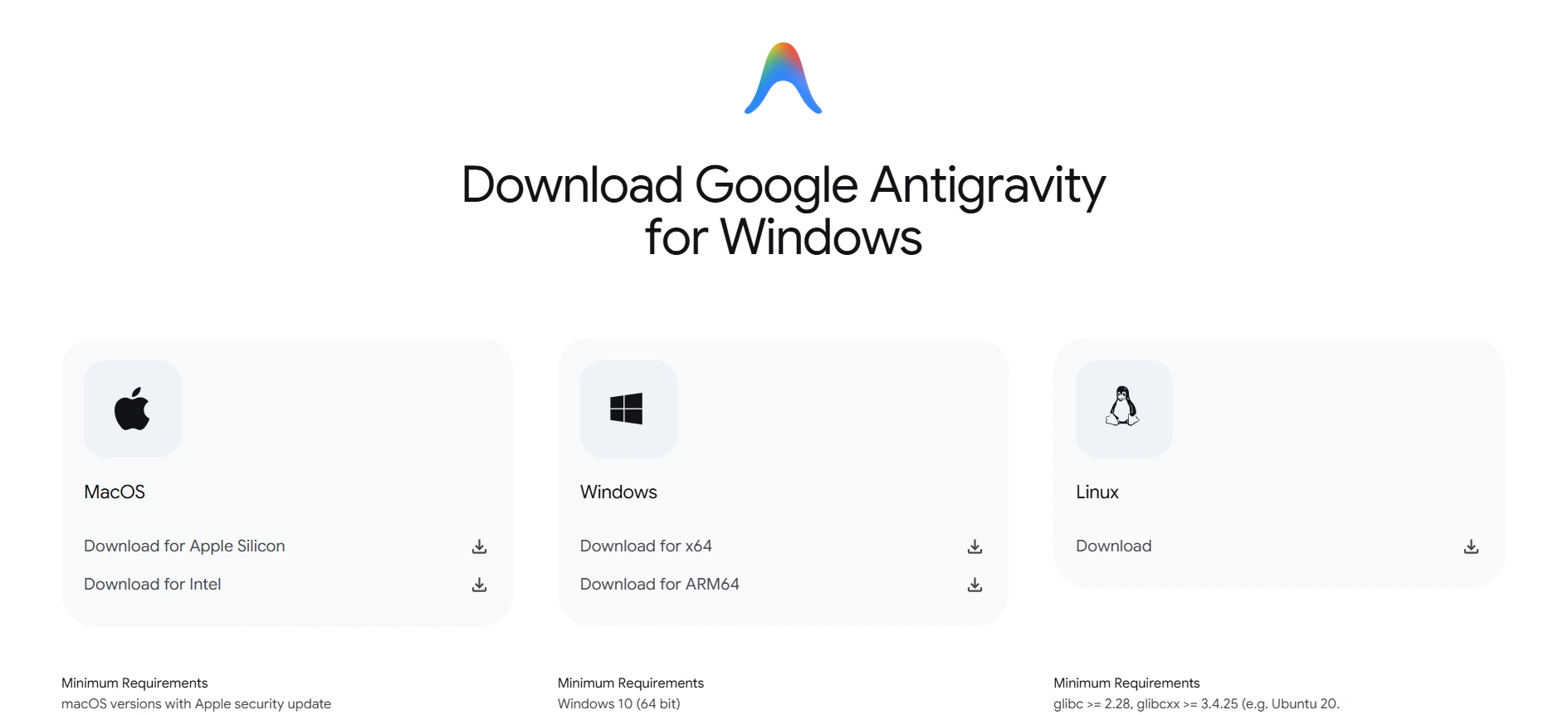
Google Anti-Gravity is a free local IDE you install on your laptop. You can build:
- apps
- websites
- tools
- dashboards
- games
…without writing code yourself (unless you want to).
What makes it different is that it behaves like a project workflow system, not just a chatbot in a code editor:
- it can plan first (task list + implementation plan)
- then execute (create files, install dependencies, run builds)
- then test (open a browser, click buttons, fill forms)
- then verify (screenshots, recordings, test results)
Also: it can let you use normally paid models/APIs for free inside the environment (depending on your setup and available integrations), like:
- Claude Sonnet
- Gemini Pro
- and faster models like Gemini Flash
And yes: it runs on Windows, Mac, and Linux.
And depending on your setup, it can also give you access to strong models inside the environment (including options like Gemini Pro / Gemini Flash and Claude-class models) so you can build faster without juggling a bunch of paid tools.
The Goldie Gravity Method: 4 Steps to Building Without Code
We use a framework called the Goldie Gravity Method.
Because the goal is simple: let the AI do the heavy lifting while we stay focused on outcomes.
1) Ground — Get crystal clear
Bad prompt:
“Build an app.”
Good prompt:
“Build a lead capture page that collects name + email, shows a thank-you page, and saves the entries to a spreadsheet.”
Clarity is the currency here. The AI doesn’t need your coding skill.
It needs your specificity.
Micro-rule: If we can’t describe what “done” looks like in one paragraph, we’re not ready to build yet.
2) Rise — Let the agents plan first
This is where Anti-Gravity is different from “just ask ChatGPT for code.”
We tell it what we want and it creates:
- a task list
- an implementation plan
- a file outline
- testing steps
We can say “change this” before it builds anything.
It’s like seeing the blueprint before anyone pours concrete.
3) Allow — Supervise the execution
Now we watch it:
- write code
- create files
- install dependencies
- run the project
- open the browser
- test flows like a human
We’re not coding. We’re directing.
Like running a team: we don’t do every task—we review results and steer.
4) Verify — Trust, but check
Anti-Gravity generates proof artifacts:
- screenshots
- recordings
- click-through tests
- results logs
This is the missing piece that makes AI building feel safe.
Quick Demo: Build a Landing Page That Captures Emails
Let’s build something useful. A simple landing page for an AI automation community:
AI Profit Boardroom
Requirements:
- headline
- 3 benefit bullets
- email signup form
- modern colors + clean design
Here’s the prompt we’d use (Ground):
“Create a simple landing page for an AI automation community called AI Profit Boardroom with a headline, three benefit bullets, and an email signup form. Use modern colors and clean design.”
How we build it
- Create a new folder:
AI Profit Boardroom Website - Switch to Planning mode (Rise)
Because planning = better output. - Let Anti-Gravity produce:
- implementation plan
- task list
- file structure (e.g.,
index.html,style.css) - testing checklist
- Switch to Fast/Execution mode and say:
“Go ahead.”
Then we watch it build and test:
- opens Chrome
- checks desktop layout
- checks mobile layout
- clicks the form
- verifies behavior
The point
A lot of people think speed comes from coding skill.
But with AI coding, speed comes from clarity.
If we’re vague, we get vague results.
If we’re specific, we get usable deliverables in minutes.
A Mindset Reset
People love to say:
“We should learn Python first. Then we’ll build.”
That’s like saying:
“We should learn Mandarin before ordering Chinese food.”
No. We point at the menu. We use pictures. We make it work.
Modern AI building is the same.
New belief: AI is our coding skill
We direct. It builds.
A film director doesn’t operate the camera.
They tell the camera what to shoot.
That’s our job now:
- describe
- review
- adjust
- ship
Shipping the Landing Page
Once it’s built, we ship it.
The simplest path: host it on a platform like Netlify (fast deploy, easy setup).
And yes—AI-built pages can rank on Google when the fundamentals are right (topic, intent, structure, clarity). The important takeaway isn’t “AI does SEO.”
It’s this:
When you can build fast, you can test fast.
When you can test fast, you can win.
Mission Control: Multiple Agents, Multiple Tasks
This is where Anti-Gravity gets unfair.
Mission Control lets us run multiple agents at once, so we can do things like:
- Agent A: plan the project
- Agent B: build the UI
- Agent C: test flows and report bugs
And yes, it has a “computer use” style agent that can open browsers and interact with what it built.
It literally clicks things while we do other work.
How Do We Ship These Products?
Once we can build, the next bottleneck is distribution.
Shipping is simple (not easy, but simple):
- Build something people already want
- Put it where they already hang out
- Accept money
- Improve weekly
Payments:
- Stripe
- PayPal
Launch/distribution:
- Product Hunt
- Twitter/X
- YouTube
- niche communities
- existing audience
Anti-Gravity helps us build fast.
Marketing helps us win.
The Takeaway
Google Anti-Gravity isn’t “a coding tool.”
It’s a building tool.
And the difference between “messing around” and “shipping consistently” is running the workflow:
Ground → Rise → Allow → Verify
Our job isn’t to become developers overnight.
Our job is to become directors with clarity.
Because the truth is:
Our bottleneck isn’t coding skill.
It’s knowing what we want.
Now let’s go build something useful.
Tega AdeyemiJanuary 09, 2026